
She Put WATER Between 2 Mirrors and It OPENED a PORTAL? | Veda Austin
watch
INTRODUCTION
What if water is capable of reflecting more than its physical surroundings?
For more than a decade, water researcher and author Veda Austin has photographed partially frozen water, documenting thousands of intricate patterns through a process she calls crystallography. Her experiments have led her to explore whether water might respond to words, images, intention, natural cycles, and its surrounding environment.
In this conversation on the Inspired Evolution Podcast, Veda shares her latest experiments with what she calls "hydroglyphs," her observations of water and salt, and discoveries from a recent journey through Egypt. While many of her interpretations remain outside established scientific consensus, her work invites a broader sense of curiosity about water, consciousness, and how much we still have to learn about the natural world.
Subscribe On



DISCOVERING A LANGUAGE WITHIN WATER
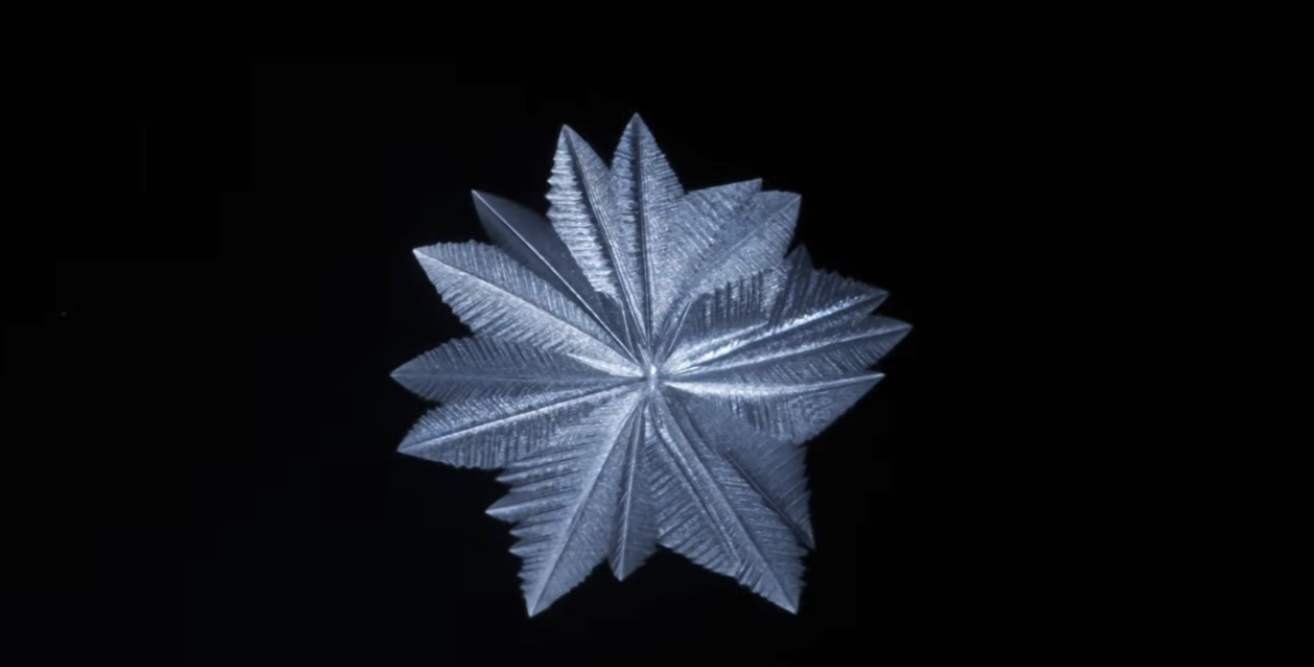
At the center of Veda's research is a freezing technique that captures water before it becomes completely solid.
By photographing water during this transitional state, she has created an archive of tens of thousands of images displaying different crystalline formations.
Among these patterns, Veda identifies a particular category she calls hydroglyphs—recurring shapes she believes appear when water is exposed to particular words or information.
She says one of the most fascinating aspects of these experiments is that similar patterns can appear even when the same idea is expressed in different languages. For Veda, this raises the possibility that water may be responding to meaning rather than simply the physical appearance of written words.
Her interpretation remains a hypothesis rather than an established scientific conclusion, but reproducibility has become an important focus of her experiments.
Veda has also begun collaborating with a group of non-speaking autistic individuals who communicate using letterboards and, according to their own accounts, telepathically. Some members of this community have offered their own interpretations of her hydroglyphs, describing the patterns as "doorways to consciousness."
Rather than presenting these interpretations as definitive answers, Veda sees them as another perspective that may help her explore what the recurring patterns could represent.
Underlying all of this is a shift in how she thinks about water itself.
Instead of asking simply whether water has a memory, Veda has become increasingly interested in whether it can reflect potential.
She describes experiments in which water exposed to seeds later produced frozen patterns resembling the plants or fruits those seeds could eventually become. Within her framework, this suggests water may somehow reflect information about what something has the potential to be.
WATER, SALT, AND THE PATTERNS OF NATURE
Veda's research has also led her to investigate how water responds to natural cycles and different materials.
One recurring formation she calls the "conception hydroglyph" consists of two touching circles. She says she has repeatedly observed this pattern in samples around the new moon, leading her to explore whether lunar cycles may influence the structures appearing in her frozen water.
A recent journey to Egypt added another intriguing layer to that research.
Veda collected water from several ancient locations and brought the samples back to New Zealand for further study. During the trip, she noticed a carved symbol on the floor of a temple that closely resembled the same two-circle formation she had been documenting in her experiments.
She doesn't present the similarity as proof of a historical connection, but sees it as an intriguing coincidence worthy of further investigation.
Salt has become another important part of her work.
Veda describes the relationship between salt and water as a "beautiful marriage." When salt dissolves, its visible crystalline structure disappears while changing the properties of the water. When the water evaporates, the salt crystallizes again.
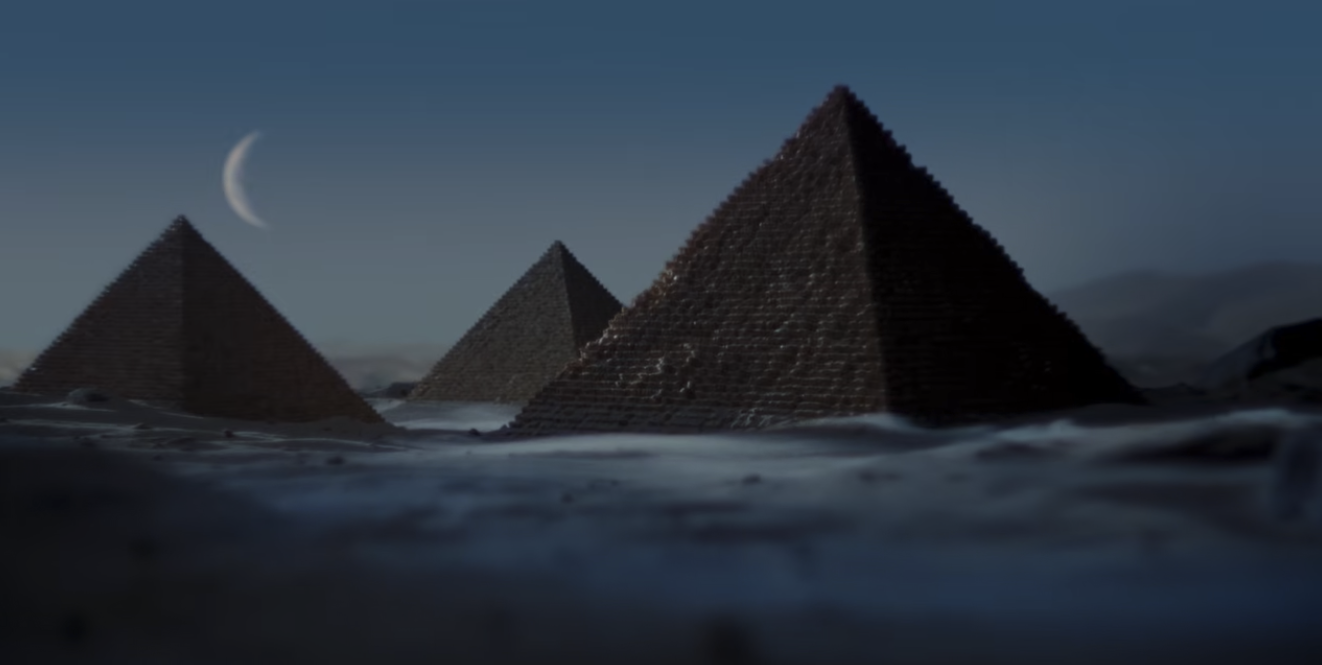
In one experiment, she briefly placed quartz in seawater before allowing the water to evaporate. She reports that the resulting salt formed pyramid-like structures rather than the shapes she normally observed, inspiring further experiments into how materials may influence crystallization.
She also uses saturated salt water, known as sole, in some of her practices and experiments.
These observations remain part of Veda's independent research rather than established conclusions about water storing information, but they continue to shape her belief that water may be far more responsive to its environment than we currently understand.
RECONNECTING WITH WATER AND THE NATURAL WORLD
Beyond the individual experiments, Veda's work carries a much simpler message:
Pay attention to what we usually overlook.
Water surrounds us, moves through our bodies, shapes ecosystems, and makes life possible, yet most of us rarely stop to consider our relationship with it.
Veda believes that relationship can become more intentional.
She discusses practices such as placing water in colored glass and sunlight, reducing environmental interference around samples, and consciously approaching water with gratitude and attention. She shares these as personal practices and observations rather than scientifically established health treatments.
Her broader curiosity also extends to the origins of Earth's water.
Scientists continue to investigate how much of Earth's water originated within the planet and how much may have been delivered by water-rich material from space. For Veda, even that scientific mystery reinforces her sense that water connects life on Earth to a much larger story.
Ultimately, her research isn't simply about proving that a particular frozen pattern means something.
It's about encouraging people to become curious again.
To observe.
To question.
And to recognize that something as familiar as a glass of water can still contain mysteries we don't completely understand.
Key Takeaways
Veda has spent more than a decade photographing patterns formed by partially frozen water.
She calls certain recurring formations hydroglyphs and believes they may reflect information presented to water.
Her interpretations of water responding to words, meaning, or consciousness remain outside established scientific consensus.
Veda's experiments have shifted her focus from the idea of water "memory" toward the possibility of water reflecting potential.
She reports recurring patterns in her samples that appear alongside natural cycles such as the new moon.
Her journey through Egypt revealed symbols she found remarkably similar to patterns previously observed in her water experiments.
Salt and water have become another major area of exploration within her research.
Veda shares practices involving sunlight, colored glass, and salt water as personal approaches rather than established medical treatments.
The origins and unusual physical properties of water continue to be areas of genuine scientific investigation.
At the heart of Veda's work is an invitation to approach water—and the natural world—with greater curiosity, attention, and respect.
Conclusion
Veda Austin's work sits at the intersection of experimentation, intuition, photography, consciousness, and a deep fascination with nature.
Her interpretations of hydroglyphs, intention, lunar cycles, and water consciousness extend beyond what mainstream science currently supports. But the questions motivating her research remain compelling.
What don't we understand about water yet?
How much information exists within the natural world that we simply haven't learned how to interpret?
And what might change if we approached something as ordinary as water with greater attention and respect?
Whether her hydroglyphs ultimately reveal something about consciousness or simply inspire new questions about crystallization, Veda's work offers a reminder that curiosity itself can change the way we experience the world.
Sometimes the things we encounter every day are also the things we've stopped truly seeing.
Related Resources
🌿 Join The Circle → inspiredevolution.com/circle
Weekly, live guided meditations, Q&As with podcast guests, and community connection. Join the movement today.
📚 Explore Dr. Suhas Kshirsagar’s teachings → ayurvedichealing.net
Learn more about Ayurvedic lifestyle medicine and personalized healing approaches.
🌀 Ground Yourself Naturally → Shop the full Earthing® catalog and use code INSPIRE to save 10%.
Stay Inspired, Keep Evolving,
Amrit
did you enjoy this episode?
please leave a review on


