
Ex Navy Commander: The Forgotten Energy Centre That Changes Your Connection to Spirit
watch
INTRODUCTION
Most spiritual traditions speak about the importance of the mind and the heart. We are taught to think clearly, love deeply, and open ourselves to higher guidance. Yet many ancient traditions point to a third center of awareness that is just as essential — and one that Western spirituality has largely overlooked.
This center sits just below the navel. In Japanese traditions it is called the hara, while Chinese medicine refers to it as the lower dantian. Across cultures, it has long been considered the body’s true energetic center — the place where physical stability, emotional balance, and spiritual power originate.
In a conversation on the Inspired Evolution podcast, retired U.S. Navy Commander and evidential medium Suzanne Giesemann shares how rediscovering this forgotten center transformed not only her spiritual practice but her understanding of healing, grounding, and connection with the spirit world. What began as a painful physical injury ultimately revealed a deeper teaching about how the body, mind, and spirit truly work together.
Subscribe On



The Hara — The Forgotten Center of Spiritual Stability
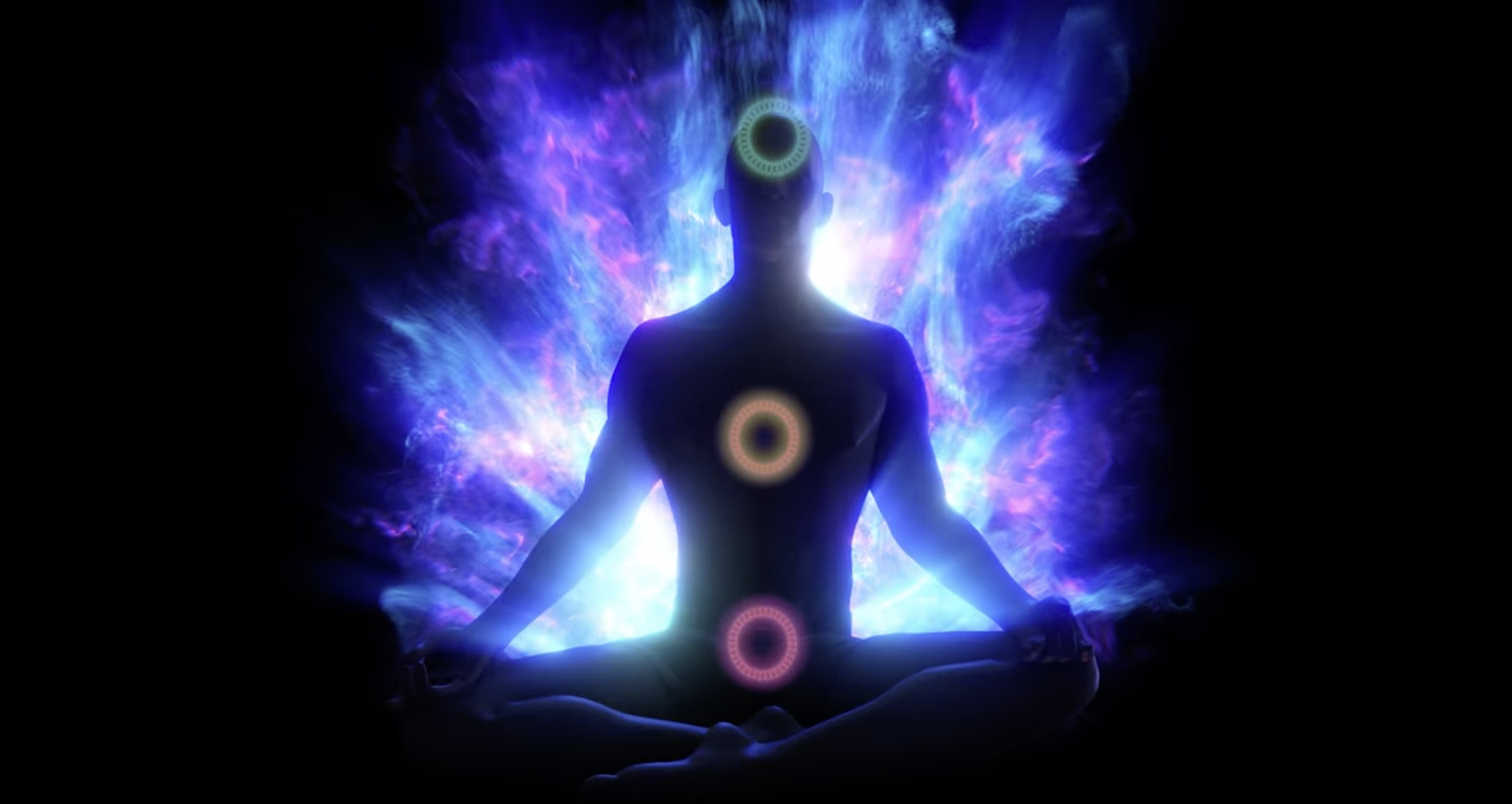
According to Suzanne Giesemann, the human energy system can be understood through three primary centers: the head, the heart, and the hara. These correspond to the upper, middle, and lower energetic engines that generate and circulate life force.
While Western spirituality has often emphasized the head (awareness) and heart (compassion), the hara — located just below the navel — provides the foundation that stabilizes both. In traditions such as martial arts, meditation, and energy healing, this center is regarded as the body’s true center of gravity.
Suzanne discovered the power of this center unexpectedly. After suffering a painful herniated disc while traveling for her documentary Wolf’s Message, she began asking deeper questions about what the body might be communicating. Rather than seeing the injury purely as a physical issue, she explored the possibility that it reflected a deeper imbalance in her energetic system.
During meditation, she realized something surprising. When her awareness remained in the head or heart, her body subtly rocked during spiritual work — almost like a lantern swinging from a chain. But when she consciously brought her attention to the hara, the movement stopped. The connection became steady and grounded, like a lantern firmly mounted on a post.
The insight was simple but powerful: without the grounding of the hara, spiritual connection can become unstable or top-heavy. When the center is engaged, awareness becomes balanced, clear, and anchored.
Clearing Fear and Emotional Energy from the Hara
As Suzanne deepened her work with the hara, another realization emerged. This energetic center was not just a source of stability — it was also a container for unprocessed emotional energy.
Through what she describes as guidance from her spiritual team, Suzanne began reviewing experiences from her life that had left deep impressions. Childhood fear, moments of trauma, witnessing major historical events, and personal losses had all left energetic imprints that had quietly accumulated in the body’s core.
These suppressed emotions had not disappeared; they had simply been stored.
Suzanne describes this process using a vivid metaphor: suppressed emotions are like beach balls being pushed underwater. The more forcefully they are held down, the more energy it takes to keep them submerged — and eventually they surface.
The spiritual path, then, is not about becoming perfect or eliminating difficult emotions. It is about allowing those hidden parts of ourselves to be seen and integrated. When fear and trauma are acknowledged rather than suppressed, the body’s energy system begins to rebalance.
This healing process can have profound effects. Suzanne shares stories of people who experienced emotional and even physical shifts after releasing deeply stored fear connected to the hara region. While these changes may appear dramatic, they reflect the body returning to its natural state once emotional resistance is removed.
In this sense, working with the hara is not only a spiritual practice but also an emotional healing process.
The HAR Method — A Practical Way to Ground Your Energy
Because of her background in the Navy and her naturally systematic thinking, Suzanne developed a simple method for working with the hara. She calls it the HAR Method, a three-step approach to grounding spiritual awareness.
H — Hold awareness in the hara.
Before meditation, prayer, or intuitive work, shift your attention to the area just below the navel. Simply rest your awareness there.
A — Anchor the body into the earth.
From this center, imagine your awareness extending down through your legs and feet into the ground, creating a stable energetic root.
R — Raise energy through the body.
With the breath, allow energy to move upward from the earth through the hara, into the heart, and then into the head and beyond.
This simple sequence activates the full vertical axis of the energy system. Instead of operating only from thought or emotion, the entire body becomes involved in the flow of consciousness.
Suzanne explains that when spiritual connection arises from this grounded center, the experience becomes clearer and more balanced. Rather than reaching outward for guidance, awareness expands naturally from a stable inner foundation.

Key Takeaways
The human energy system can be understood through three main centers: the head, the heart, and the hara.
The hara, located below the navel, is considered the body’s true center of gravity and energetic stability.
Western spiritual traditions often overlook the hara, focusing primarily on the mind and heart.
Unprocessed fear and emotional experiences can accumulate in the body’s core, affecting both wellbeing and spiritual clarity.
Healing involves integrating suppressed emotions rather than denying them.
The HAR Method offers a simple way to ground spiritual awareness: hold awareness in the hara, anchor into the earth, and raise energy through the body.
When the hara is engaged, spiritual connection becomes steadier, clearer, and more embodied.

Conclusion
The rediscovery of the hara offers a powerful reminder that spiritual growth is not only about expanding upward into higher states of awareness. It also requires grounding deeply into the body.
For Suzanne Giesemann, the lesson arrived through physical pain and emotional reflection, ultimately revealing a forgotten center of stability within the human energy system. When attention returns to this center, the mind becomes calmer, the heart opens more naturally, and spiritual connection arises from a place of genuine balance.
In a world where many people feel mentally overwhelmed or spiritually disconnected, the hara offers something simple yet profound: a return to center.
Sometimes the most powerful spiritual insights are not about reaching higher — but about remembering where we already stand.
Related Resources
🌿 Join The Circle → inspiredevolution.com/circle
Weekly, live guided meditations, Q&As with podcast guests, and community connection. Join the movement today.
📚 Explore Dr. Suhas Kshirsagar’s teachings → ayurvedichealing.net
Learn more about Ayurvedic lifestyle medicine and personalized healing approaches.
🌀 Ground Yourself Naturally → Shop the full Earthing® catalog and use code INSPIRE to save 10%.
Stay Inspired, Keep Evolving,
Amrit


did you enjoy this episode?
please leave a review on


